
Gearbox supports
Clamping bushings
Bushings
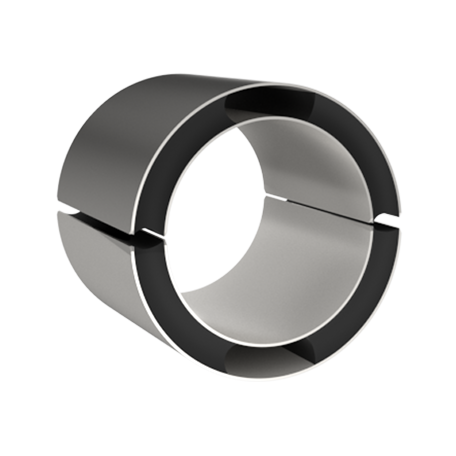
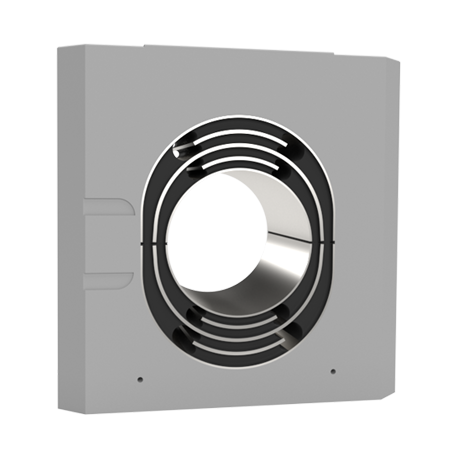
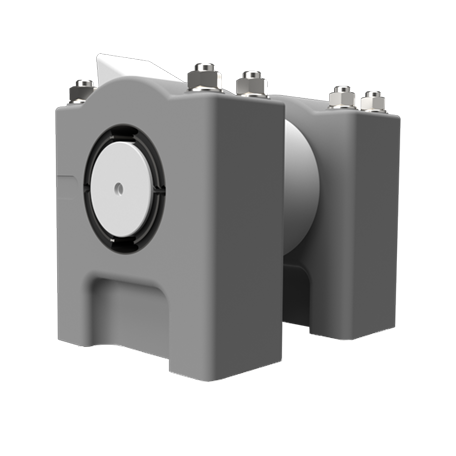
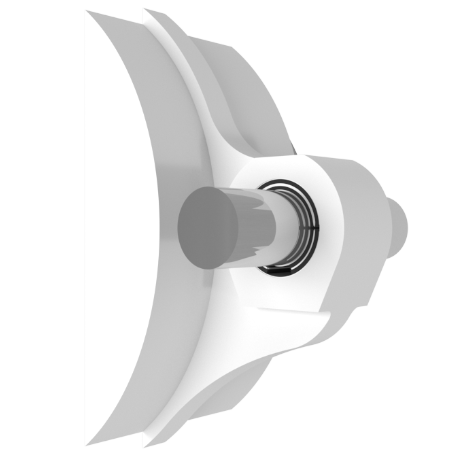
ESM supports the industry with bushings developed to meet the specific requirements of each application. Those products are typically used to support gearboxes as part of the three-point suspension of the drivetrain.
The ESM bushing consists of two half-bushings braced against each other, enabling easy fitting. This type of bushing, is designed to perfectly match the needs of your drivetrain. The focus is on optimizing vibration and damping. Optimized types with up to four layers of rubber are available to minimize structure-borne noise.
ESM has also developed noise-optimized versions for especially noise-critical applications. Our bushings are able to bear the full load of the drivetrain as well as to transfer high torques. If required, custom housings can be developed and built.
Properties
- Particularly suitable for transfer of higher torques and forces
- Can carry the weight of the drivetrain
-
Available as noise- and vibration-optimized version
Applikations
- Wind industry, e.g. drivetrains of wind turbines
- Maritime applications, e.g. drivetrains of vessels
- Power generation, e.g. tidal power plants
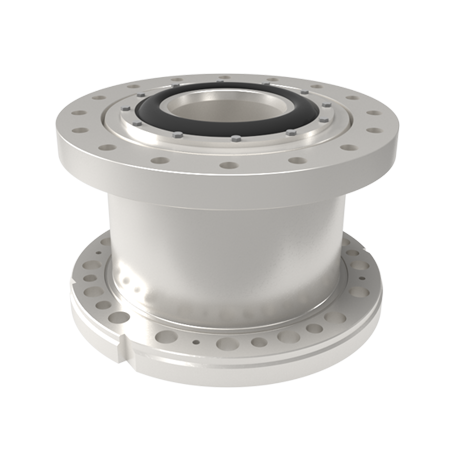
Gearbox support for non-rotating planet carriers
This specific gearbox support takes the torque between the stationary planet carrier and the main frame.
The elastomer bushing is integrated into a cast housing. This complete module is built into the gearbox housing, enabling the elastic suspension of the planetary carrier of the first stage. A specially developed membrane protects the elastomer bushing from being damaged by gear oil.
Properties
-
With integrated protective membrane
Applications
- Wind industry, e.g. drivetrains of wind turbines
- Power generation, e.g. tidal power plants
- Common drivetrain applications, drive systems and components
Axial pre-stressable bushings
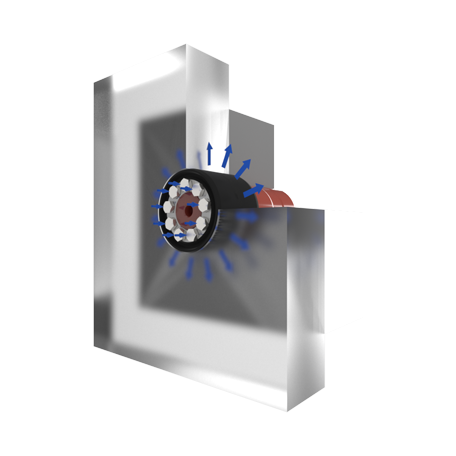
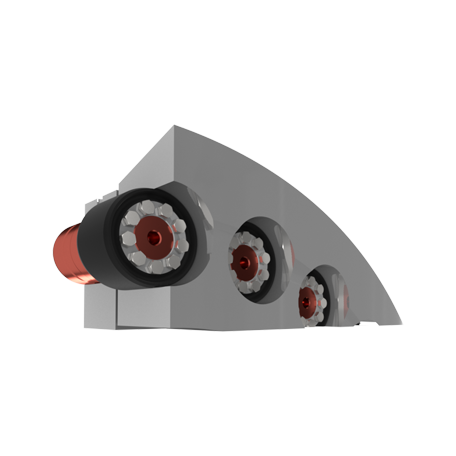
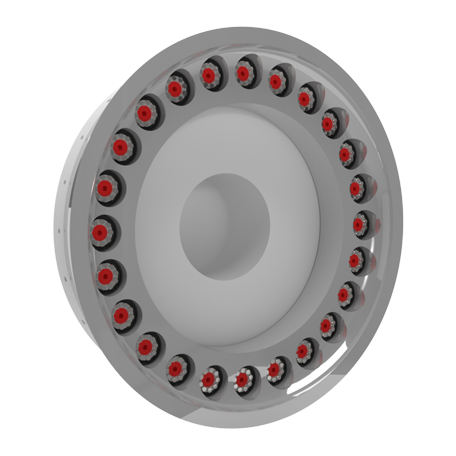
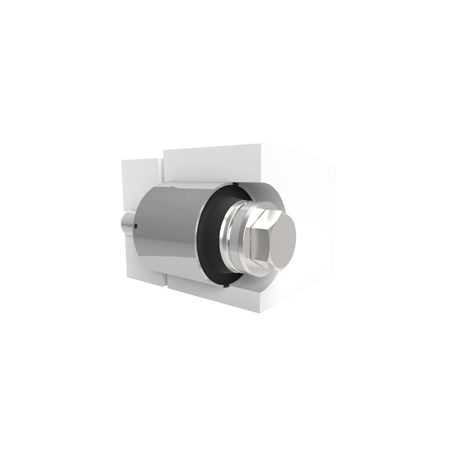
Axial pre-stressable bushings are an innovative system from ESM for numerous applications. They can be used for example in the form of elastomeric couplings.
During installation, there is a small radial clearance between the bushing and the boring, allowing the bushing to be easily inserted axially. When the bushing is stressed axially, it expands in a radial direction and is pressed firmly against the boring.
If required, the bushing can be easily and safely removed by relieving the pre-stressing.
Properties
- Bushings needn’t be forced into borings
- After pre-stressing, the bushing fits tightly inside the boring
- Easily removed by relieving pre-stressing
Applications
- As a coupling for torque transmission with compensation for axial and angular misalignments
- Gearbox support
- Wind turbines, drivetrain, mechanical engineering
Torque arm supports
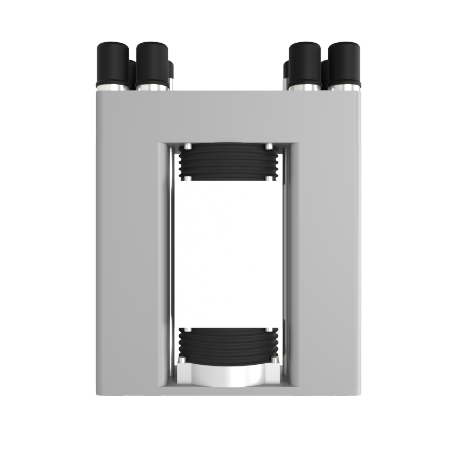
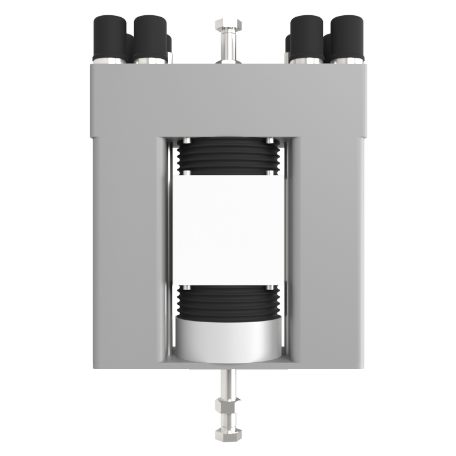
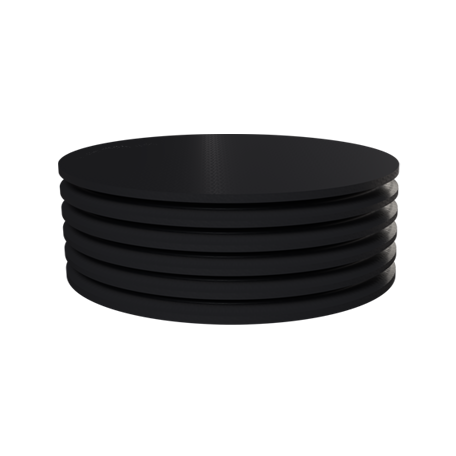
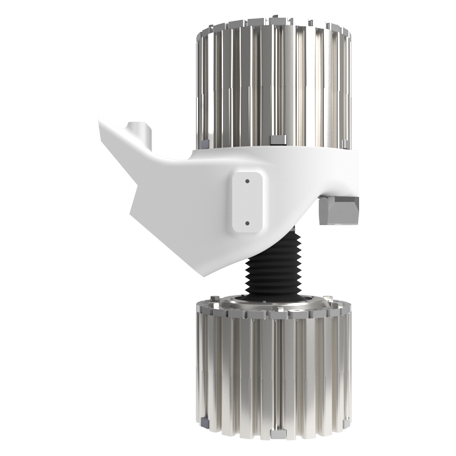
ESM torque arm supports are designed as multilayer sandwich components. Parallel rubber layers separated by metal sheets isolate the structure-borne noise of the application. The number of layers varies depending on the type of support, loads, isolation level, stiffness requirements and design space. These supports are able to transfer high pressure loads combined with minimal lateral stiffness.
The ESM ‘pendulum support’ is a specific product example making excellent use of the concept of high torque strength and low lateral stiffness. This component consists of several conical supports which achieve a very smooth axial and lateral behaviour. Deformations up to 15 mm can be easily absorbed.
Properties
- Support of high axial forces
- Low lateral stiffness
- Optional capability of mounting adjustments
Applications
- Wind industry, e.g. drivetrains of wind turbines with four-point suspension
- Power applications such as tidal power plants
- Common drivetrain applications, drive systems and components
- Maritime applications, e.g. drivetrains of vessels
Elastomeric hydraulics
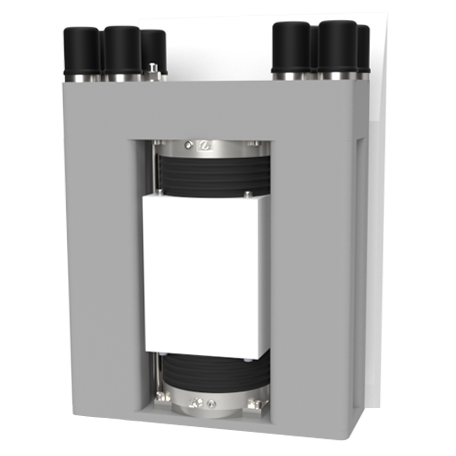
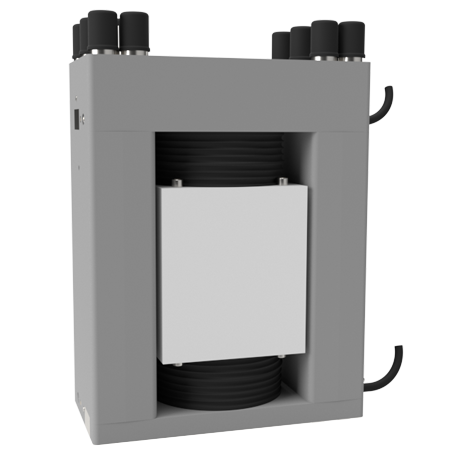
ESM has developed a gearbox support which combines hydrostatic properties with elastomeric properties. This suspension is used in drivetrains with a defined rotor shaft support (two bearings).
This rotor shaft support in combination with a conventional gearbox support creates constraining forces acting on the gearbox shafts and bearings. The elastomeric part has an integrated hydraulic chamber and works without any seals or piston-cylinder contacts which might be affected by wear.
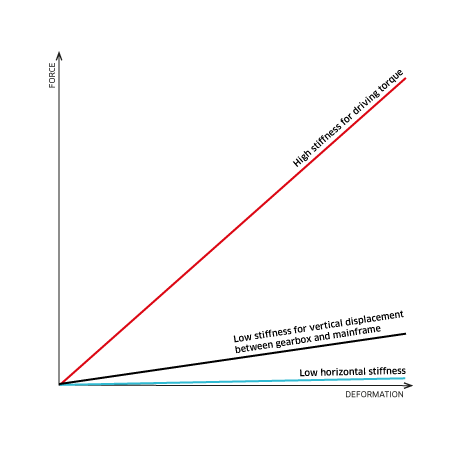
The system works with the cross linkage of the hydraulic elements. Both pressure and non-pressure sides are connected crosswise between the two sides of the gearbox torque arm. This leads to smooth behaviour in the case of vertical movements due to deformations under operating conditions or assembly misalignments. This in turn minimizes the constraining forces on the gearbox and maintains the higher stiffness to transfer the torque.
The functional principle of the hydraulic gearbox support illustrates our product video.
When using at least three pairs of elements, the system can also be used as a coupling.
Properties
- Constraining forces reduced by more than 90%
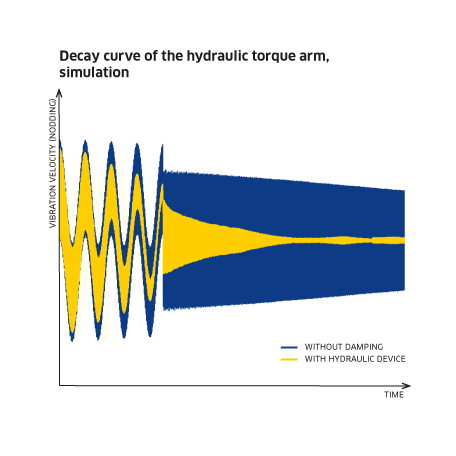
- Efficient integrated damping of tilt vibrations of the drivetrain
- Easy to fit
- No maintenance or wear
Applications
- Wind industry, e.g. drivetrains of wind turbines with four-point suspension
- Power generation, e.g. tidal power plants
- Common drivetrain applications, drive systems and components
- Maritime applications, e.g. drivetrains for boats
Flange decoupling
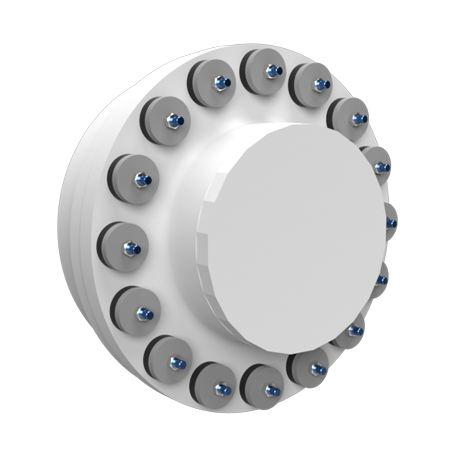
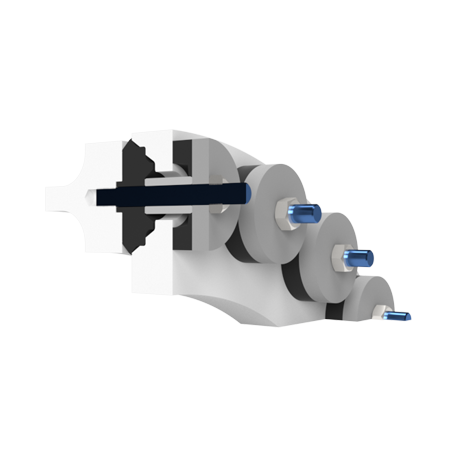
ESM has developed a unit consisting of a multilayer sandwich mount and a conical mount to avoid the high bending moment entering the central bolt as a result of a torsional moment. This acting torsional moment leads to a radial force entering the elastomeric unit. The conical mount can transfer this radial force. The multilayer sandwich mount has very low stiffness in this radial direction.
This leads to a nearly bend-free situation in the central bolt because the bending stress is the result of the small radial force transferred by the multilayer sandwich mount.
Properties
- Decoupled arrangement of the rotor-gearbox unit
- Reduced weight and costs
- The number of elements can be adapted to the load
Applications
- Coupling
- Gearbox support to transfer the drive torque, yaw and nodding moments
- Flange decoupling for towers, rotors and motors
- Drivetrains, wind turbines, tidal generating stations